
Why alerts matter
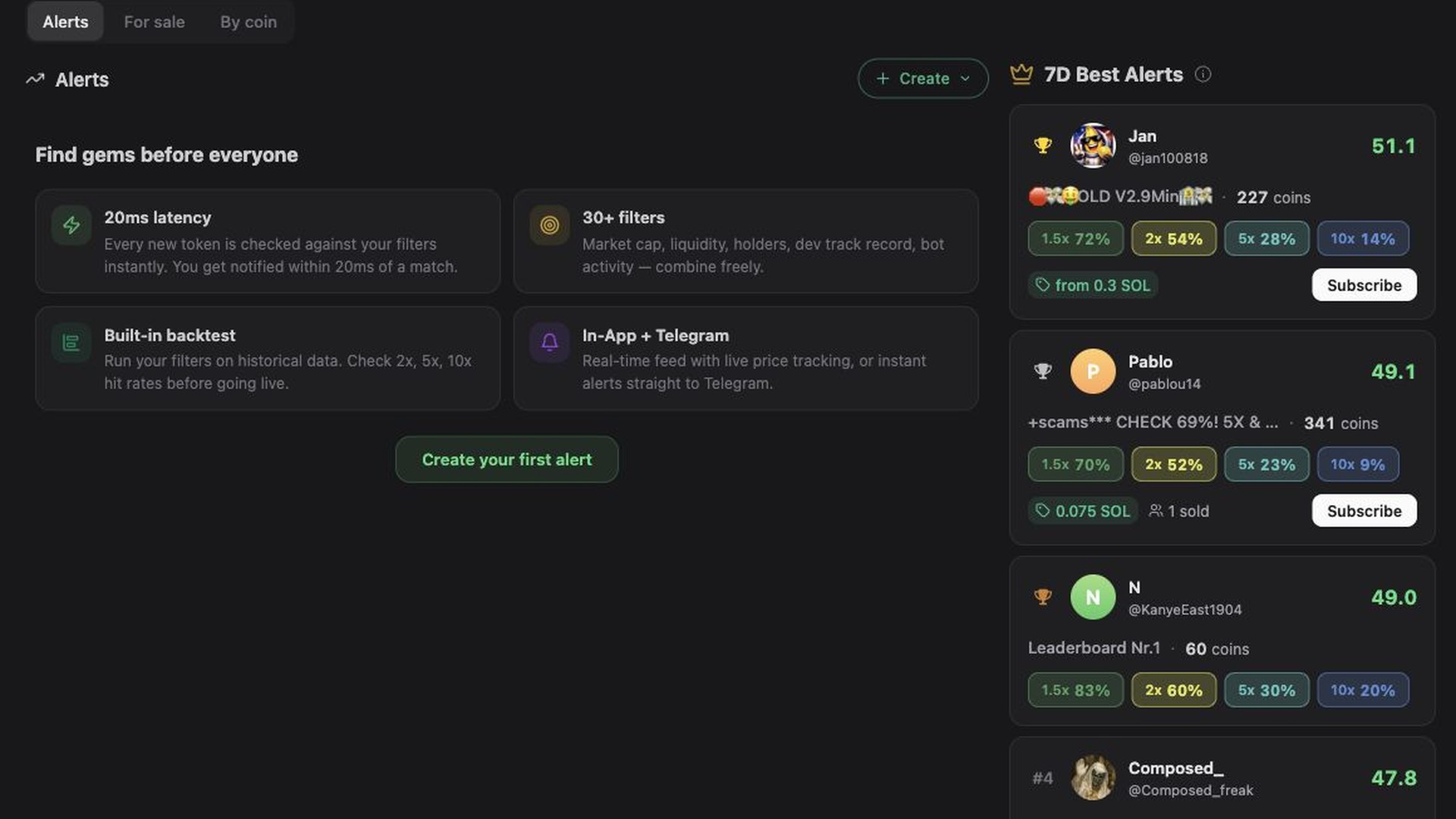
Solana produces more tokens than a trader can manually watch. Most of them are not suitable for a trade because liquidity, holder structure, fees, volume or chart behavior fail basic checks. Fasol Alerts lets you define conditions once and receive a signal only when a token resembles your setup.
A good alert does not promise profit. It saves attention. The alert creates a shortlist, then the trader still reviews the token before acting.
One alert, one strategy
Avoid putting every condition into one giant alert. An early volume setup, a post-migration setup, a clean launch setup and a deep buy setup should be separate. This keeps results measurable and prevents mixed signals.
Core filter blocks
Risk filters
Alerts become more useful when they remove obvious traps. Holder concentration, dev behavior, bundle hold, sniper exposure, taxes, fresh wallets and bot trader share can all change the risk profile of a token.
Setup ideas to test
- Market cap: 80k-180k
- Liquidity: 10k-40k
- Age: up to 10 minutes
- ATH: 50k-500k
- Drop from ATH: 80-85%
- Bot Fee: from 2 SOL
Review the alert quality
Run a new alert without size at first. Record every signal, not only winners. Track whether the token bounced, died, reached 2x, failed immediately or produced no tradable structure. A setup is only useful after you see how it behaves across a real sample.
Risk note
Alerts reduce search time, not trading risk. Do not buy every alert, do not average down without a plan and do not treat one good day as proof of a system.
Fasol Alerts FAQ
How many alerts should I create first?
Start with one or two. Too many alerts can recreate the same noise you were trying to remove.
Can I copy ready filters without testing?
Use them as a hypothesis only. Market conditions change, so every setup should be checked against current results.